Winning a tender is never just about being the cheapest. Capable contractors routinely miss out on work they were perfectly qualified to deliver because of mistakes in their submission.
A misread scope, a missing compliance document or a takeoff that was out by 8%: are the avoidable errors that cost you the job before an evaluator has even reached your price.
Fortunately, these mistakes are fixable, and most of them come down to process rather than luck. This guide covers the tender submission mistakes that most often lose contracts across the Australian and New Zealand construction market, and exactly how to fix each one before you lodge.
Key takeaways:
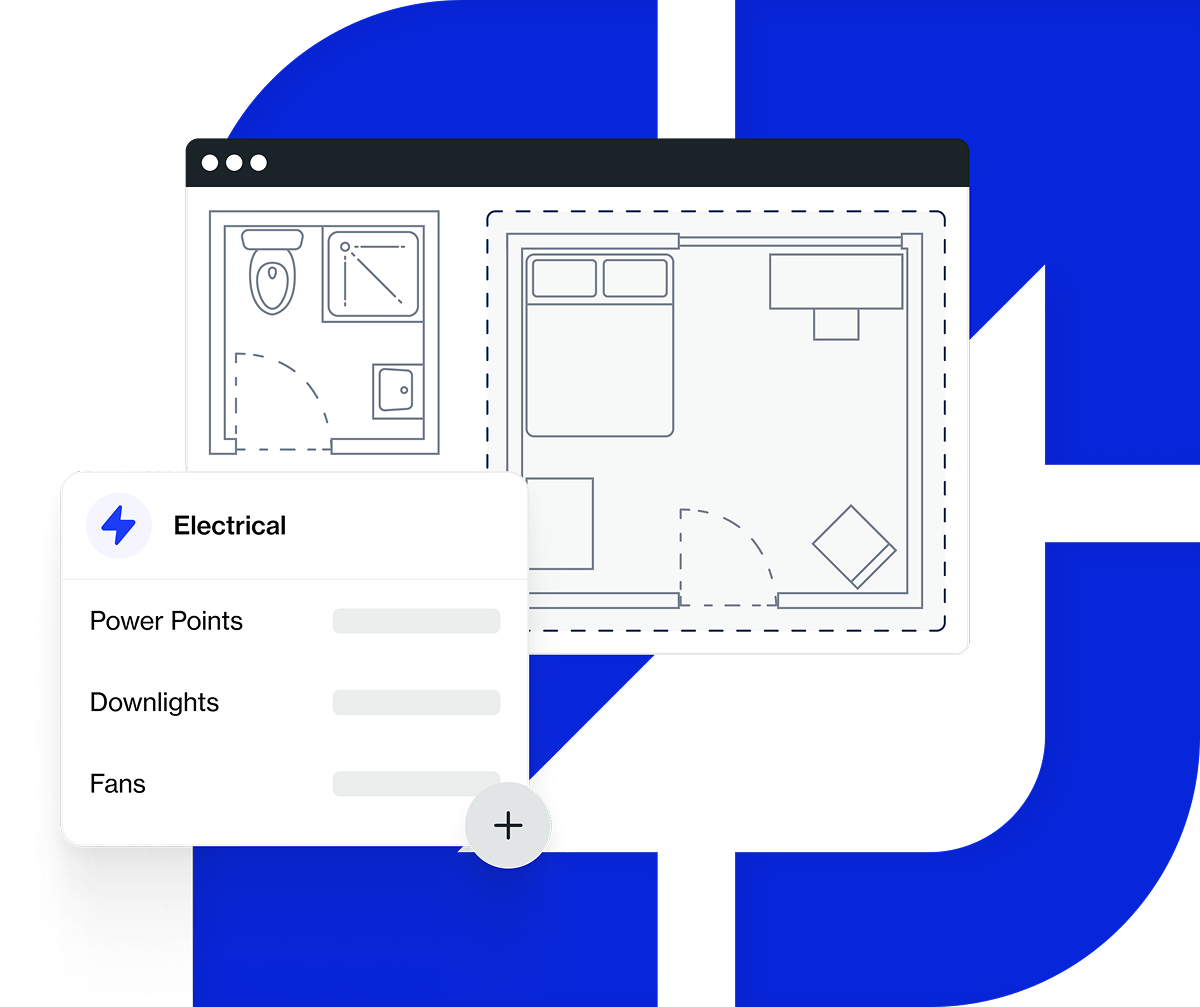
One of the most fundamental mistakes in tender preparation is misunderstanding the takeoff stage. Miscalculations can lead to significant over, or under-pricing.
- Why tender errors are more expensive in 2026 than they were even a year ago
- The most common mistakes contractors make, with updated examples
- What evaluators are actually scoring when they read your bid
- How accurate takeoffs protect your pricing and your margin
- A 10-point pre-submission checklist you can run on every tender.

Why Are Tender Errors More Costly Than Ever?
According to the Australian Construction Industry Forum's May 2026 forecasts, industry growth could be “brought to a standstill” this year. That’s a sharp reversal from the 3.6% growth recorded in 2025, with total building and construction work potentially contracting by 0.8% in 2026. The dominant pressures are higher interest rates, renewed inflation and squeezed margins construction already tops the national count for insolvencies.
It’s a similar story in New Zealand. MBIE's National Construction Pipeline Report describes a sector that contracted in late 2025 before a gradual return to growth, with residential activity in regions such as Canterbury forecast to fall well below its 2023 peak before recovering.
What does that mean for your tenders? Fewer projects, more bidders per project and thinner margins on the work you do win. When 10 contractors chase a job that five would have chased two years ago, evaluators can afford to be ruthless. A submission error that might once have been overlooked now moves you straight to the reject pile. In a tight market, process discipline is a competitive advantage.
Tendering itself is also expensive. Every bid consumes estimator hours, and a low win rate erodes your margin on the jobs you do secure. Master Builders Australia and other industry bodies increasingly stress bid/no-bid discipline for exactly this reason. Chasing fewer, better-matched opportunities and preparing each one properly beats a scattergun approach that wins little.
Choosing the right projects and the right principals to work for is part of tendering well. Assess feasibility, resourcing and the builder's payment reliability before you commit time to a price.
The Most Common Tender Submission Mistakes
The mistakes below account for the overwhelming majority of avoidable tender losses. None of them are about talent or trade skill — they're about the submission itself.
Not Reading the Scope Correctly
Misreading or underestimating the scope is the most damaging error, because it undermines everything downstream. If your interpretation of the works differs from the principal's, your bid either looks non-compliant or hides a cost blowout you'll wear later.
How to fix it: Read the full tender documentation before you touch a price, not after. Raise Requests for Information (RFIs) the moment something is ambiguous. Guessing is never cheaper than asking. Where possible, attend the site visit as a five-minute walk often reveals access, height or issues with the existing conditions that a drawing won’t show. Finally, cross-check your scope against the drawings and the specification, because the two don't always agree.
Submitting Without All Required Documents
A technically brilliant bid that's missing a mandatory form is often disqualified before it's even read. Insurances, licences, safety documentation, statutory declarations and capability statements all need to be there.
How to fix it: Build a returnable schedule checklist from the tender's own submission requirements and tick each item as you attach it. Treat the deadline as the time the portal closes, not the time you press send. Uploads fail, files corrupt and portals queue under load.
Pricing Errors From Inaccurate Takeoffs
Most pricing mistakes are actually quantity errors. A miscount of light fittings, a wrong scale or a repeated room multiplied incorrectly flows into your rates and either prices you out or wins you a job you'll lose money on.
How to fix it: Verify the drawing scale before you measure anything, double-check counts on repeating elements and keep an auditable record of how every quantity was derived. Digital takeoff tools remove most manual counting errors and let you re-check a measurement in seconds rather than re-counting a whole sheet.
Weak Executive Summaries
Evaluators often read the executive summary first and the detail second. A summary that simply restates the price, or reads like a template, wastes the one section guaranteed to be read closely.
How to fix it: Use the summary to show you understand this project, including its constraints, its programme and its risks, and to state clearly why you're the right contractor to deliver it. Lead with relevance.
Generic Boilerplate Copy
Reusing the same methodology and capability text across every tender is efficient, but evaluators recognise recycled copy instantly, and it signals that you haven't engaged with their project.
How to fix it: Keep a library of strong base content, but tailor the specifics every time, including the project name, site conditions, key personnel and programme milestones. Small, accurate details do more for credibility than pages of generic prose.
Missing Compliance Requirements
Public and larger private tenders increasingly carry mandatory compliance criteria such as work health and safety systems, industrial-relations codes, insurance thresholds and prequalification levels. If you miss one of these, no amount of sharp pricing saves the bid.
How to fix it: Read the evaluation criteria and conditions of tendering carefully, and confirm you meet every mandatory requirement before you invest time in pricing. If you don't qualify, it's better to know on day one than on submission day.

What Do Evaluators Actually Look For?
It helps to understand what happens to your submission after you lodge it. If you speak to procurement teams and project managers, the same four themes come up again and again.
Clarity
Evaluators are scoring many bids against a fixed set of criteria, often under time pressure. Submissions that map cleanly to the evaluation criteria (answering each in order, in the language the tender uses) are easier to score well.
Evidence of Capacity
It isn't enough to say you can deliver; you need to show relevant recent projects, available resources and the team who'll actually run the job.
Realistic Pricing
A price that's too low reads as risk, not value. Australian government procurement guidance is explicit that “value for money does not necessarily mean lowest price”. It's a balanced judgement of cost, capability, risk and past performance. An abnormally low bid invites scrutiny about what you've missed.
Professional Presentation
A clean, consistent, error-free document signals how you'll run the job. When two bids are close, the more professional submission wins, and this is entirely within your control.
For a deeper look at pricing the job so it's both competitive and profitable, see our guide on markup vs margin for contractors and our construction quoting template.
How Accurate Takeoffs Protect Your Tender
The root cause of most pricing errors is the quantities. Your rates can be perfect, your overheads correctly apportioned and your margin exactly where you want it, but if the takeoff says 180 metres of cable tray when the job needs 230, every other number is wrong.
If you under-measure, you win a job that loses money but over-measuring means you price yourself out of work you should have won.
Manual takeoffs introduce errors at exactly the point where they’re most expensive (in miscounts, missed items, transcription slips between the plan and the spreadsheet and calculations that no one can retrace weeks later when a variation is queried).
Digital measurement removes most of that risk. Measuring onscreen from the PDF, with automated counting and length tallies, cuts manual error dramatically and leaves an auditable record of exactly how each quantity was derived.
When a principal questions a number, you can point to the marked-up plan instead of re-counting under pressure. That traceability separates a defensible tender price from a guess.
If you're considering moving away from spreadsheets, our comparison of online takeoff software explains where the time and accuracy gains actually come from.
A Pre-Submission Checklist
Run this 10-point check on every tender before you lodge. It takes minutes and catches the errors that cost contracts.
- Have you read the entire tender document, including the specification and conditions of tendering?
- Do you meet every mandatory criterion?
- Have all RFIs been raised with the answers incorporated?
- Has the drawing scale been verified before measuring?
- Have quantities and counts been double-checked, with an auditable record kept?
- Are all returnable schedules and forms completed and attached?
- Are insurances, licences and safety documentation current and included?
- Is the executive summary specific to this project, not a template?
- Has the submission been proofread for spelling, numbering and formatting?
- Are you lodging with buffer time before the portal closes, not at the deadline?
How Groundplan Supports More Credible Tenders
Groundplan is built to remove the quantity errors that undermine tender pricing. You upload your plans, measure onscreen and generate a bill of quantities directly from the drawings. There’s no scale rule, no printed sheets and no re-counting.
Because every measurement lives on the marked-up plan, you keep an auditable record of how each quantity was derived, which makes your pricing easier to defend when a principal queries it.
Count Assist speeds up repetitive counting of fittings and symbols, and your export flows straight into your estimate, so the number you price is the number you measured. If you’re tendering in a tight market, that combination of speed, accuracy and traceability is exactly what turns a rushed bid into a credible one.
Frequently Asked Questions
What is the most common tender submission mistake?
Misreading the scope. It's the most damaging because it distorts every downstream number and can make an otherwise strong bid look non-compliant. Reading the full documentation before pricing, and raising RFIs early, prevents most of it.
Why do accurate tenders matter more in 2026?
Because the market is tighter. ACIF forecasts a possible 0.8% contraction in Australian construction work in 2026 after 3.6% growth in 2025, which means more bidders per project and thinner margins, so submission errors are punished more than they used to be.
Does the lowest price always win a construction tender?
No. Australian procurement guidance is clear that value for money is a balanced judgement of price, capability, risk and past performance, not simply the lowest number. An abnormally low bid can read as risk rather than value.
How do digital takeoffs reduce tender errors?
They cut manual counting and transcription error, let you verify measurements in seconds and leave an auditable record of how each quantity was derived. This makes your pricing both more accurate and easier to defend.
How long before the deadline should I submit?
Leave a real buffer. Treat the deadline as the moment the portal closes, not the moment you upload. Files corrupt, connections drop and portals slow under last-minute load.
Winning Comes Down to Process, Not Price
A winning tender is the product of discipline rather than luck. The contractors who consistently convert bids aren't necessarily the cheapest, but they read the scope properly, submit complete and compliant documents, price from accurate quantities and present their work professionally.
In a market where projects are fewer and margins are tighter, that discipline is the difference between winning profitable work and losing it on an avoidable error.
Start with the quantities, because that's where most pricing mistakes begin, and it's the part you can fix today.
Try Groundplan on your next tender. Start your free 7-day trial and measure your next set of plans onscreen. Expert onboarding is included, so you're estimating accurately from day one.
Conclusion
Submitting a successful tender requires more than just accurate numbers—it demands careful attention to detail, professionalism, and strong relationships. By avoiding these five common mistakes, Tradies can enhance their chances of standing out in a competitive bidding process.
Hi, I'm Jack Clarke, General Manager of Concept Electrical Estimating, Concept Mechanical Estimating, and Concept Plumbing Estimating. Our skilled team of estimators handles projects of all sizes across Australia and New Zealand. With offices in Melbourne and Perth, we focus on three key promises: 1. Helping you win the job, 2. Ensuring you meet deadlines, and 3. Minimising risk. We're passionate about supporting our clients' success in the industry and are always ready to offer expert advice on estimating.